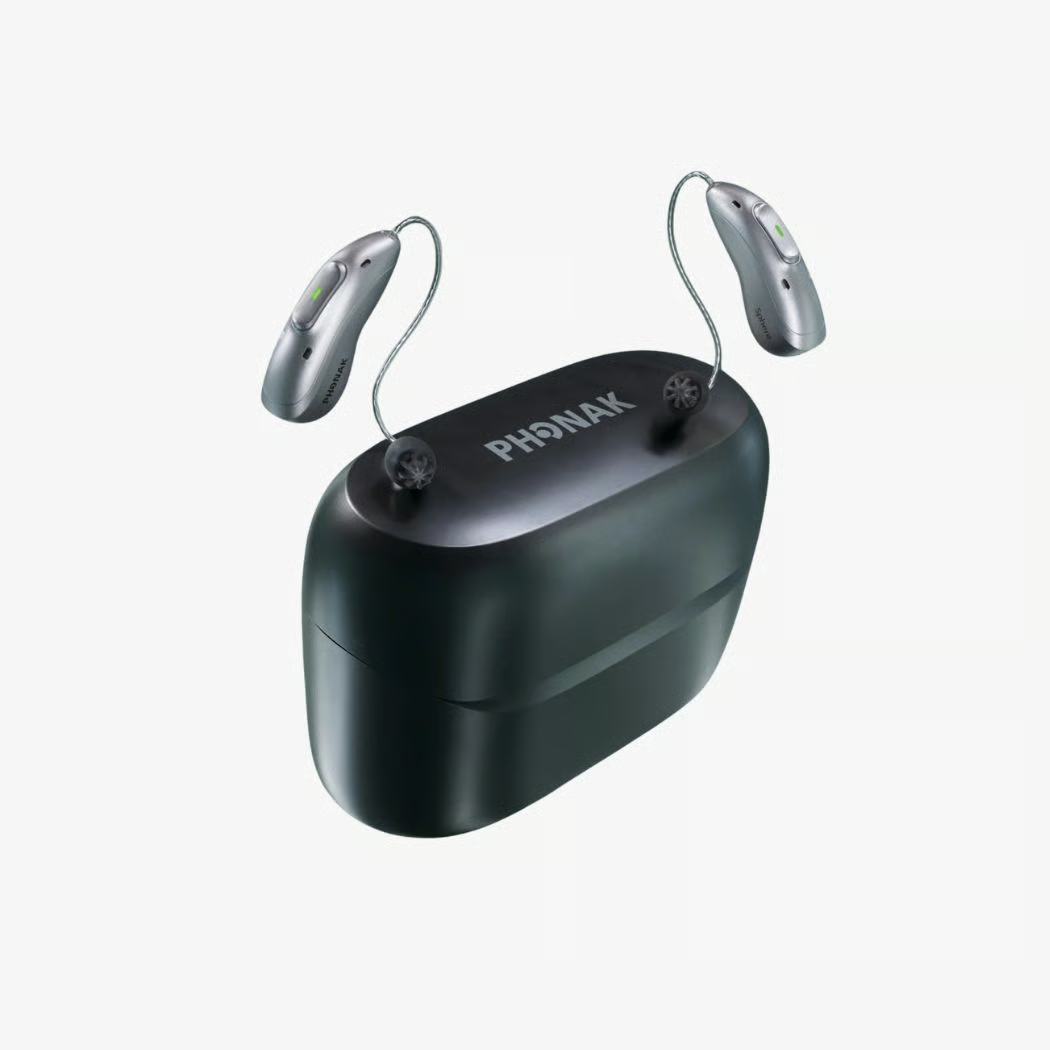


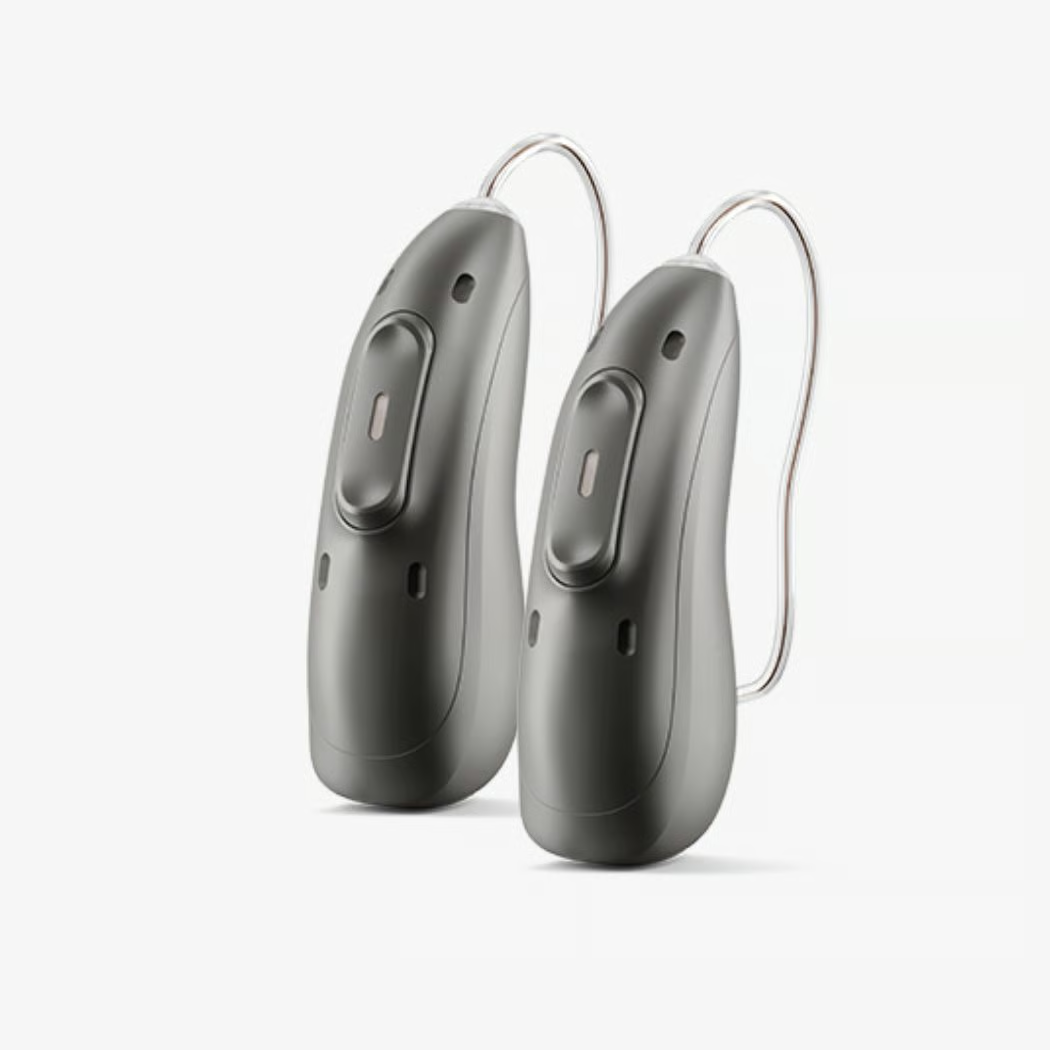
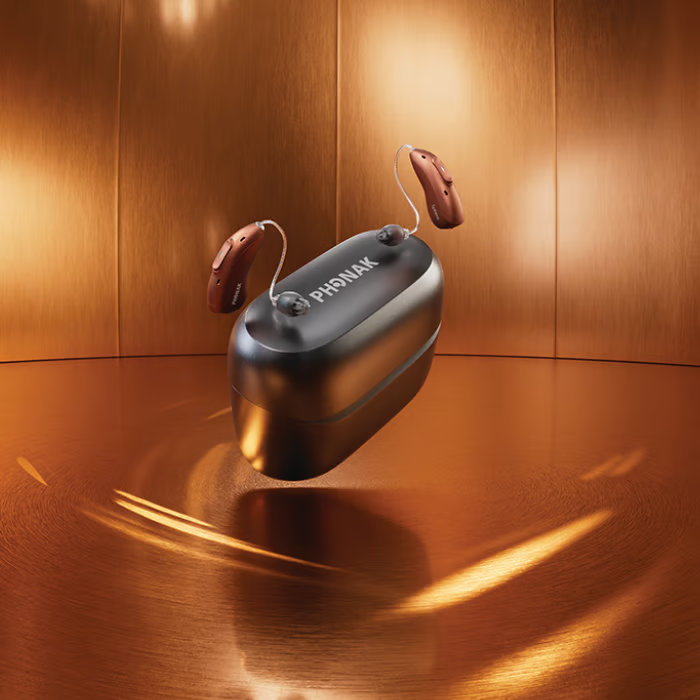
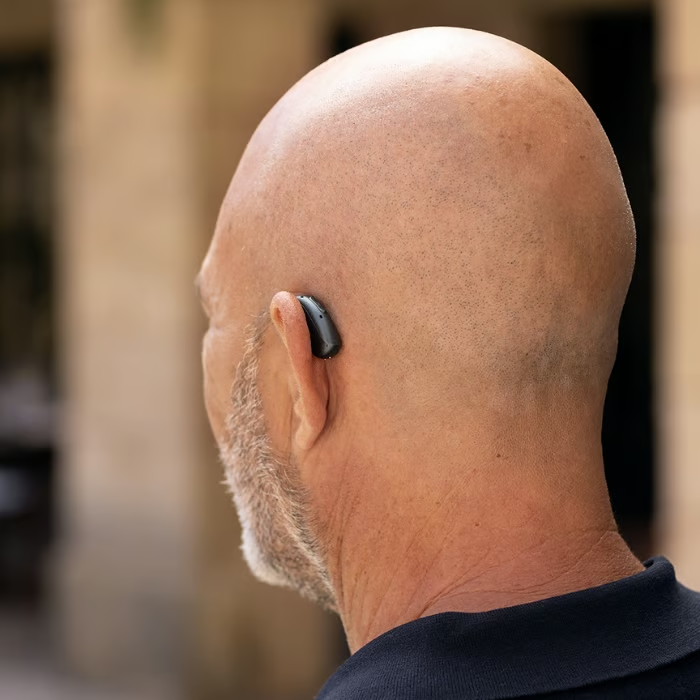



Full Review

Concert crowds, neighborhood chatter and the hearing aid that sometimes hears a little too well.
Quick Take
For readers who want the highlights:
Best For:
People who spend time in noisy environments and want some of the most advanced speech-in-noise technology currently available.
What Stood Out:
The dedicated AI processing for speech understanding was genuinely impressive, particularly when conversations originated from unexpected directions.
My Favorite Feature:
The ability to customize microphone focus through the myPhonak app when the hearing aid became a little too good at finding speech.
One Thing to Consider:
Auracast capability is built in, but the connection process currently requires a venue-provided QR code and isn't as seamless as some competing implementations.
Prefer to watch? Along with our audiologist’s clinical perspective, watch Blake’s video review for a consumer’s take on the hearing aid and the experience of wearing it day to day.
My Review Philosophy
Before we begin, a quick disclaimer: I don't have hearing loss. As an audiologist, however, I spend my days fitting, programming, troubleshooting, and evaluating hearing technology. That gives me a unique perspective on sound processing, Bluetooth performance, user experience, and app functionality.
Rather than sitting in a lab, I put hearing aids through everyday situations that many users encounter:
- Restaurants
- Outdoor walks
- Phone calls
- Music streaming
- Fitness activities
- Social gatherings
- Quiet moments at home
Because hearing aids aren't worn in a test box. They're worn in real life.
Soundscape #1: ‘90's Music and Unintentional Eavesdropping
One of my first major listening tests happened at an outdoor summer concert featuring a lineup of ‘90's bands.
Picture a lawn venue.
Families relaxing in folding chairs.
Music filling the air.
Three of us enjoying the afternoon together.
The perfect environment to see what EON Sphere could do.
The hearing aids’ AI processing quickly demonstrated why Phonak dedicated an entire chip to speech understanding.
Conversations flowed naturally regardless of which family member was talking.
Speech seemed to arrive effortlessly from wherever the dominant speaker happened to be sitting.
Then the crowd grew.
As outdoor concerts tend to do.
The remaining patch of grass directly behind us was eventually claimed by a girls' night-out group who were very enthusiastic about both the concert and discussing their upcoming concert schedule.
Very.
Enthusiastic.
And suddenly I learned something.
The Sphere doesn't just hear speech.
It finds speech.
All speech.
Even speech you weren't necessarily trying to hear.
I unintentionally became an honorary participant in their conversation.
Had I wanted the latest neighborhood updates, grocery store gossip, or a preview of next month's social calendar, I was all set.
For my actual goal of listening to my family and the music?
Not quite.
Thankfully, this became a perfect example of why users should spend time exploring the myPhonak app.
A few quick adjustments to microphone focus and a personalized program later, the Sphere was focusing on where I wanted it to focus: the concert and the people I came with.
Lesson learned.
Sometimes good technology still benefits from a little direction.

Soundscape #2: The Hearing Aid Equivalent of a Spotlight
My next test occurred during one of Phonak's educational dinner presentations.
The setting was less than ideal acoustically.
A semi-private room.
High ceilings.
A neighboring room that became increasingly lively as the evening progressed.
Even with normal hearing, I found myself appreciating the extra support.
But the most impressive moment happened during audience questions.
We had four tables spread throughout the room.
When someone from the farthest table asked a question, the EON Sphere immediately locked onto that voice.
The sound seemed to leap across the room and arrive directly in my ears.
The best analogy I can think of is a flashlight.
Normally, hearing can feel like standing in a dark room holding a lantern. You see everything around you, but nothing is strongly highlighted.
Sphere was more like taking that lantern and turning it into a focused spotlight.
The beam narrows.
The target becomes clearer.
Everything else becomes less important.
That is exactly what happened with speech.
The hearing aid found the person speaking, dramatically reduced competing noise, and brought that voice forward without requiring me to reposition myself or ask for repetition.
Honestly, it was one of the more impressive demonstrations of speech processing I've experienced while testing hearing aids.
Soundscape #3: The Gym Test (Featuring an AirPods Identity Crisis)
As someone training for triathlons, I spend a fair amount of time in the gym.
And if you're going to test hearing aids properly, they need to survive treadmill miles, crowded workout sessions, and the occasional battle for equipment during peak hours.
I typically reach for my AirPods when listening to music.
Not because hearing aids can't stream.
Simply because that's been my routine.
One afternoon I started a workout, pressed play on my fitness playlist, and got several miles into my treadmill session before realizing something.
I wasn't wearing my AirPods.
I was streaming through the Sphere hearing aids.
The bigger surprise?
I hadn't noticed.
More importantly, I hadn't missed them.
At no point during the workout did I think:
"I wish I'd grabbed my AirPods."
That was probably the highest compliment I could give the streaming experience.
Calling My Mom: The Official Sound Quality Test
Every review needs a benchmark.
Mine happens to be my mother.
Over the course of testing numerous hearing aids, she has unknowingly become one of my most reliable evaluators.
After several phone conversations using Sphere, her feedback was immediate:
"This is the best you've sounded."
Now, moms can be biased.
But clear speech is clear speech.
The call quality was consistently excellent.
Why Streaming Sounded Different
One area where Sphere particularly impressed me was music streaming.
Without getting overly technical, hearing aids need to account for the acoustics of whichever dome or earpiece is attached.
The fitting software compensates for those acoustic differences, so streamed audio sounds more natural.
The result is a richer listening experience that feels more like wearing headphones than traditional hearing aids.
Phonak also recognizes the difference between speech content and music content.
And that's important because music is significantly more complex.
For me, the payoff was noticeable.
Music sounded full.
Balanced.
Natural.
And, enjoyable enough that I accidentally forgot I wasn't wearing dedicated earbuds.
Auracast: One Area Still Finding Its Stride
Auracast is becoming one of the most talked-about innovations in hearing care and accessibility.
And rightfully so.
The ability to receive direct broadcasts in public venues has tremendous potential.
Sphere is Auracast-ready, which is exciting.
However, my experience wasn't quite as seamless as some competing systems.
Currently, connecting often requires a venue-supplied QR code.
That means the venue needs to know it supports Auracast and understand how users access the service.
As awareness grows, this will likely become easier.
For now, users may need to be a little proactive and ask venue staff if Auracast is available and request a QR code if wearing Sphere hearing aids.
The technology is promising.
The real-world implementation is still catching up.
What I Loved
✅ Outstanding speech understanding in noisy environments
✅ Impressive AI-powered speech focus
✅ Excellent streaming quality for music and calls
✅ Smaller size than previous generations
✅ Highly customizable app controls
✅ Ability to create personalized listening programs
✅ Strong performance in crowded and dynamic environments
What Could Be Better
While Auracast support is included, the connection process currently requires more effort than some competing implementations.
Users may need to request a QR code or seek assistance from participating venues before connecting.
The technology is absolutely worthwhile.
The user experience still has room to mature.
Final Verdict
Phonak EON Sphere reminded me that hearing aids are no longer just amplification devices.
They're becoming intelligent listening assistants.
Whether I was sitting at an outdoor concert, attending a professional training event, talking with family, streaming music at the gym, or calling my mother, Sphere consistently demonstrated why it has become one of the most talked-about hearing aids in the industry.
Its greatest strength wasn't simply making sounds louder.
It was helping speech stand out when it mattered most.
Just don't be surprised if it occasionally hears conversations you weren't planning to join.
Trust me on that one.
I'd Love to Hear from You
Have you tried Phonak EON Sphere or another hearing aid that completely surprised you?
Was there a moment when a hearing aid helped you hear something you hadn't noticed before, or perhaps a moment when you accidentally overheard a conversation you weren't meant to hear?
Share your experiences, favorite features, or even your frustrations. Some of the best lessons in hearing care come from real-world stories, and I'd love to hear yours. You can reach me at kristina@soundly.com.
Prescription Hearing Aids: Programmed using manufacturer first-fit settings with a flat 40 dB hearing loss configuration and occluded ear tips.
Additional Programming: One to two supplemental manual programs were added when available, typically Speech in Noise and Music, unless those settings were already included by default.
Evaluation Period: Approximately 3-4 days of cumulative wear time across multiple real-world listening environments.
Note: Individual experiences will vary based on hearing loss, lifestyle, fitting adjustments, listening preferences, and the counseling provided by a hearing care professional.